
Vegan Breakfast Casserole with Hash Browns
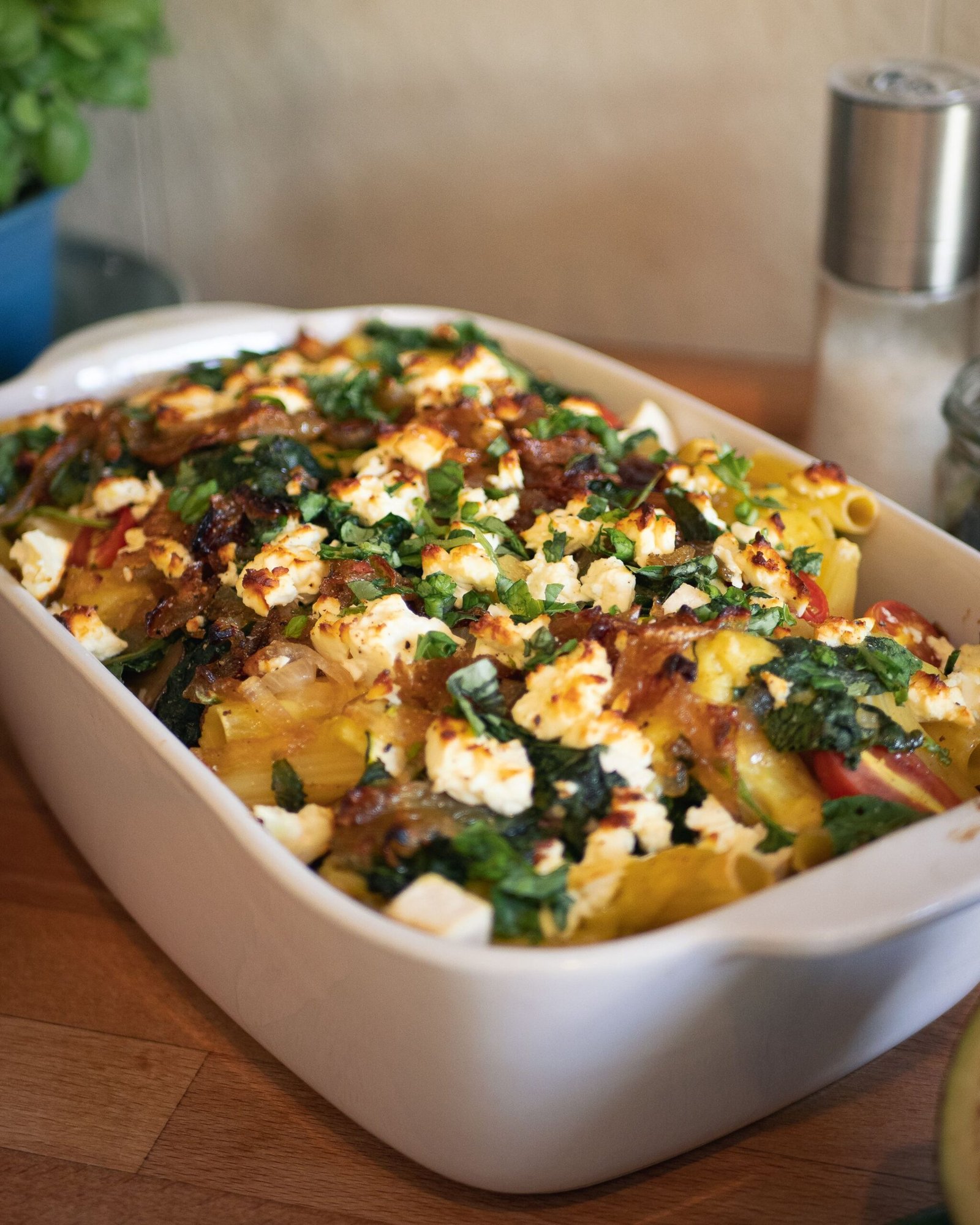
A warm vegan breakfast casserole is one of those breakfasts that can do several jobs at once. It works for a relaxed weekend brunch, a holiday morning, or meal prep when you want something savory waiting in the refrigerator.
This version is built around potatoes or hash browns, colorful vegetables, plant-based protein, and a savory egg-free filling. There’s no dairy or eggs, and you can adjust the vegetables, protein, and toppings depending on what you already have.
The best part is the flexibility. You can use shredded hash browns for a softer, layered casserole, diced potatoes for more bite, or roasted breakfast potatoes when you want crisp edges. Add tofu, chickpea flour, plant-based sausage, spinach, peppers, mushrooms, or vegan cheese to make it your own.
It’s exactly the kind of practical, make-ahead breakfast Mealloom is built around.
Why This Vegan Breakfast Casserole Works
A good breakfast casserole needs contrast.
The potatoes provide the hearty base. Vegetables bring texture and flavor. A tofu or chickpea flour filling helps bind everything together without relying on eggs, while nutritional yeast and seasonings add a savory finish.
Plant-based sausage is optional, but it works well when you want a more substantial brunch casserole. Vegan cheese can also be added on top or mixed through the filling.
Another advantage is that much of the preparation can be done ahead. Cook your vegetables, prepare the potatoes, and mix the filling in advance. When you’re ready to eat, assemble the casserole and bake it until the middle is set and the edges are lightly golden.
That makes vegan breakfast casseroles especially useful for mornings when you’d rather spend less time standing over the stove.
Ingredients You’ll Need
You don’t need an elaborate ingredient list. Think of the casserole as a combination of a potato base, vegetables, an egg-free filling, and optional extras.
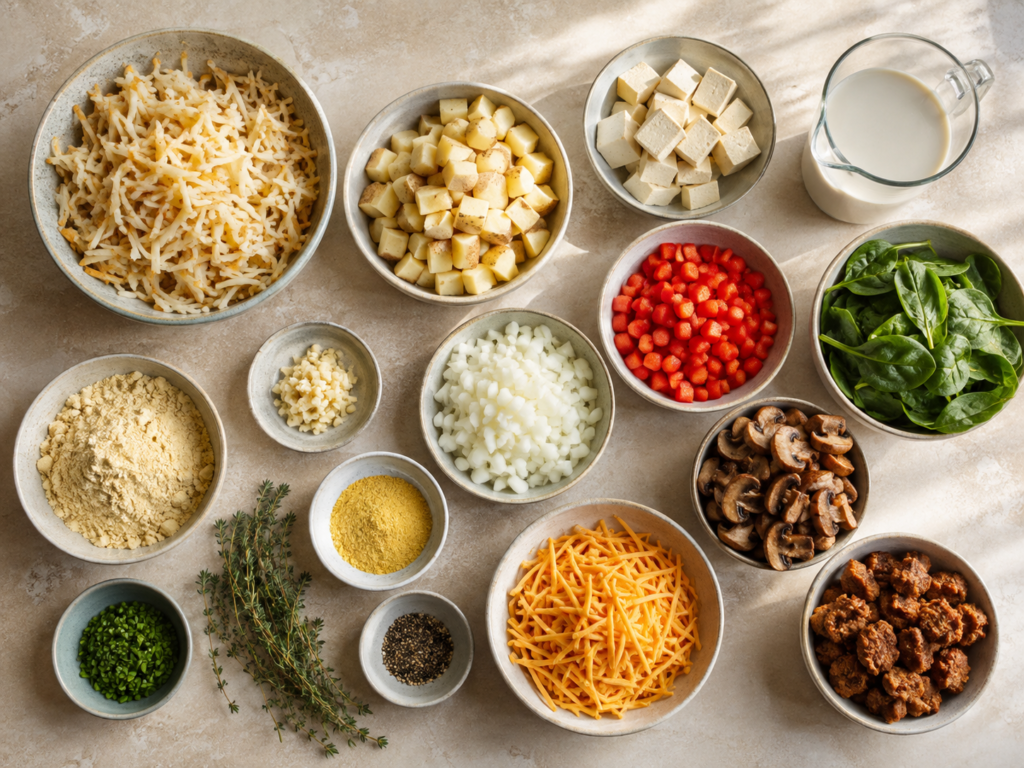
Hash Browns or Potatoes
Frozen shredded hash browns are convenient and reduce prep time. Freshly shredded potatoes can also work, though you’ll want to manage the extra moisture.
Diced or roasted potatoes give the casserole a chunkier texture and more distinct bites.
Tofu or Chickpea Flour
These are two useful foundations for an egg-free filling.
Blended tofu creates a softer, more custardy texture. Chickpea flour mixed with unsweetened plant milk creates more structure once baked.
You can also combine the two if you want some of the creaminess of tofu with the firmer set that chickpea flour can provide.
Unsweetened Plant Milk
Plant milk helps loosen the filling so it can spread through the casserole.
Choose an unsweetened, neutral-flavored variety. Sweetened or vanilla-flavored milk can taste out of place in a savory breakfast.
Nutritional Yeast
Nutritional yeast adds a savory flavor that works well with potatoes, tofu, and vegetables.
It isn’t meant to make the entire casserole taste like cheese. Use it as one layer of flavor along with garlic, herbs, salt, pepper, and other seasonings.
Vegetables
Onions, bell peppers, spinach, mushrooms, broccoli, and tomatoes can all work.
The main thing to watch is moisture. Mushrooms, spinach, and some other vegetables release water as they cook, so sautéing them first usually gives you better control over the final casserole texture.
Optional Plant-Based Sausage
Vegan breakfast sausage adds another savory element and can make the casserole feel more substantial.
Brown or cook it according to its package instructions before adding it to the casserole.
Optional Vegan Cheese
A little vegan cheese on top can create a richer finish, but the casserole doesn’t depend on it.
If you skip it, nutritional yeast, herbs, garlic, and a well-seasoned filling can still provide plenty of flavor.
Hash Browns or Potatoes: Which Works Best?
There isn’t one correct answer. It depends on the texture you want.
Vegan hash browns create a softer, more cohesive potato layer. Shredded potatoes fit easily into a casserole dish and are especially convenient when you use a frozen variety.
Always check the ingredient label on packaged hash browns. Some products may contain dairy-derived ingredients or other additions that don’t fit a vegan recipe.
Diced potatoes create more texture. Each piece stays more distinct, especially if you roast or partially cook them first.
Roasted breakfast potatoes work well when you want browned edges and a slightly more rustic casserole.
If you’re looking at vegan breakfast casserole potatoes as the main component, consider how you plan to serve the dish. Shredded hash browns work particularly well for brunch-style casseroles, while roasted cubes are great when you want something closer to a breakfast hash that holds together when sliced.
How to Make a Vegan Breakfast Casserole
1. Prepare the Potatoes
If you’re using frozen hash browns, prepare them according to the needs of the casserole and make sure they aren’t carrying excess moisture.
For fresh shredded potatoes, squeezing out extra liquid can help prevent a watery base.
Diced potatoes should be partially cooked or roasted until they’re beginning to soften.
2. Cook the Vegetables
Sauté onions, peppers, mushrooms, spinach, or other vegetables before adding them.
You don’t need to cook everything until completely soft. The goal is to remove some of the excess water and develop flavor.
3. Make the Egg-Free Filling
Blend tofu with unsweetened plant milk, nutritional yeast, garlic, herbs, salt, and pepper for a smooth filling.
For a chickpea flour version, whisk the flour with plant milk and seasonings until there are no dry lumps.
If combining tofu and chickpea flour, the mixture should be pourable enough to move between the vegetables and potatoes.
4. Prepare Your Protein
If you’re using plant-based sausage, brown or cook it before assembling the casserole.
You could also use black beans, chickpeas, or another savory plant-based protein.
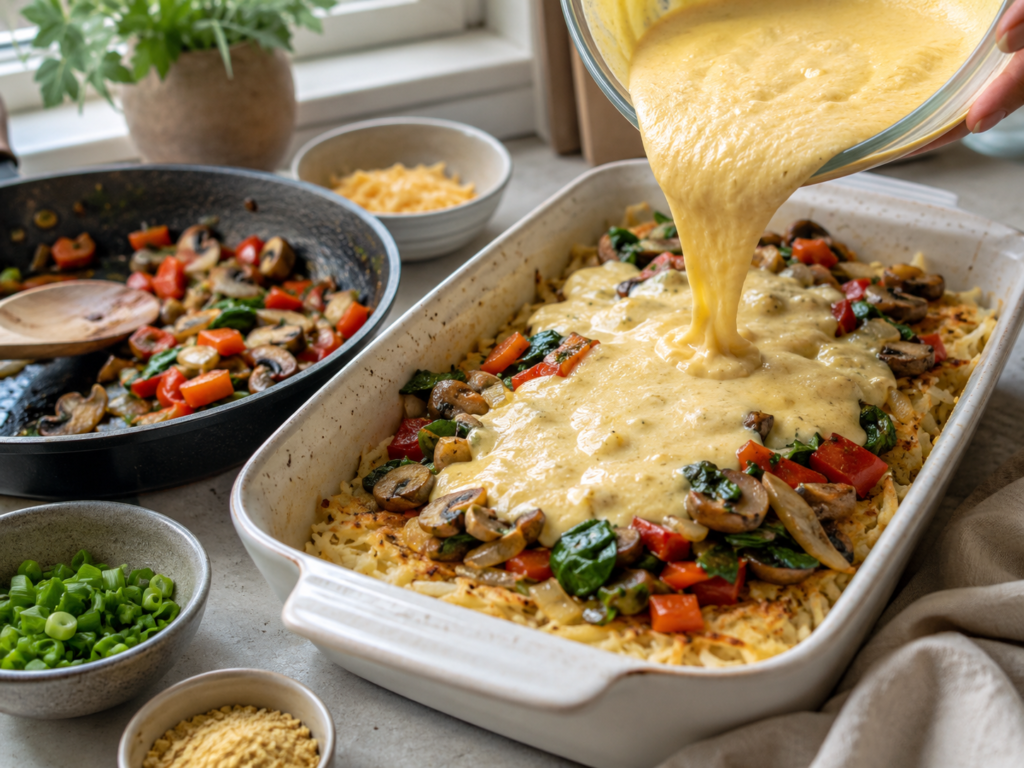
5. Assemble the Casserole
Spread the potatoes or hash browns across the baking dish.
Add the cooked vegetables and protein, distributing them fairly evenly so one section isn’t all potato while another is mostly filling.
Pour the egg-free mixture over everything.
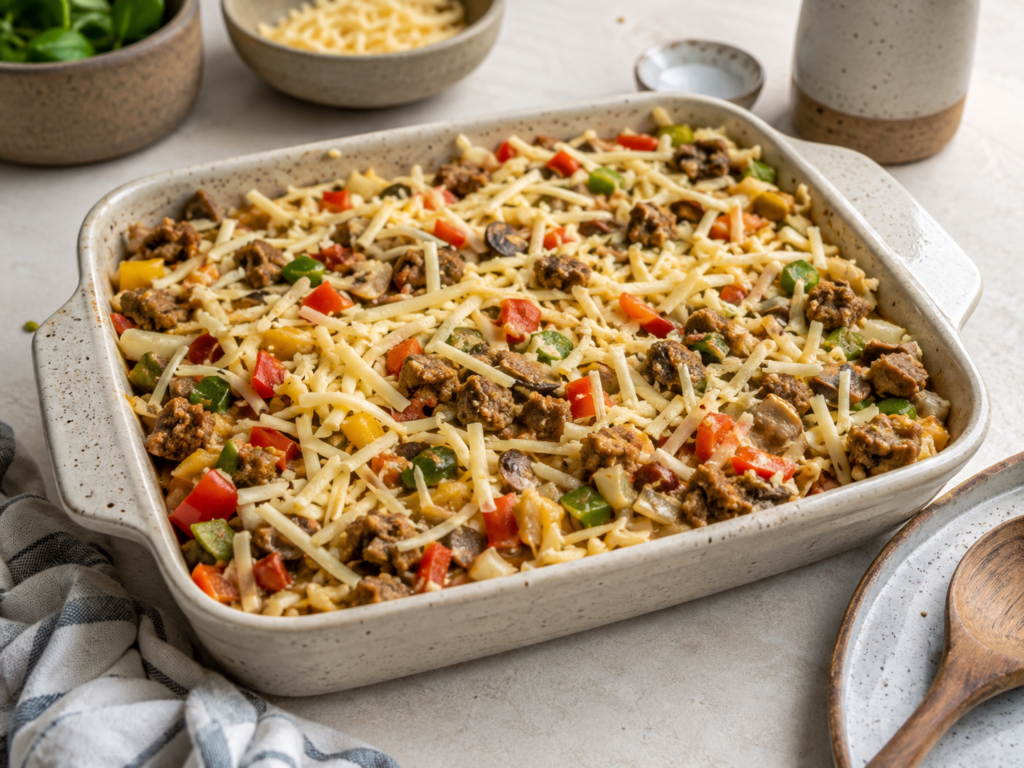
6. Add Vegan Cheese if Using
Sprinkle vegan cheese over the top or add a small amount between layers.
This is optional, so don’t worry if you prefer to skip it.
7. Bake Until Set
Bake until the center no longer looks wet and the edges begin to turn lightly golden.
A casserole with tofu may remain somewhat soft, while a chickpea flour filling tends to become firmer.
Use the appearance and texture of the center as your guide instead of relying only on a timer.
8. Let It Rest
Give the casserole a little time to settle after baking.
Cutting it immediately can make even a properly baked filling look softer than it really is. A short rest helps the slices hold together more cleanly.
Vegan Egg Alternatives for Breakfast Casseroles
Eggs perform several jobs in traditional breakfast casseroles, but there are plant-based ways to create a similar structure.
Blended tofu gives the casserole a soft, savory filling. It works especially well with mushrooms, spinach, peppers, and breakfast potatoes.
Chickpea flour behaves differently. Once mixed with liquid and baked, it creates a firmer texture that can help bind vegetables and potatoes together.
Using tofu plus chickpea flour gives you a middle ground: some creaminess from the tofu and added structure from the chickpea flour.
Commercial vegan egg substitutes can also work, but follow the manufacturer’s instructions because different products behave differently when baked.
If you want to make the casserole without tofu, chickpea flour is probably the simplest place to start.
Vegetarian vs. Vegan Breakfast Casserole
A vegetarian hash brown casserole isn’t automatically vegan.
Vegetarian breakfast dishes can still contain eggs, cow’s milk, dairy cheese, and butter. A vegetarian breakfast casserole with hash browns often uses several of those ingredients to hold everything together and add richness.
A vegan version uses plant-based alternatives instead:
- Eggs → tofu, chickpea flour, or a vegan egg substitute
- Cow’s milk → unsweetened plant milk
- Dairy cheese → vegan cheese or nutritional yeast
- Butter → vegan butter or oil
- Meat-based breakfast sausage → plant-based sausage
The basic idea of the casserole stays familiar. You still have potatoes, vegetables, a savory filling, and optional cheese or sausage-style ingredients. The difference is in the ingredients used to create those layers.
Easy Add-Ins and Variations
Once you understand the basic structure, this casserole is easy to change.
For a spinach and mushroom version, sauté both before assembling so they don’t release too much water while baking.
For broccoli and peppers, lightly cook the broccoli first so the pieces aren’t too firm compared with the rest of the casserole.
For something with a Southwestern direction, combine black beans, peppers, corn, jalapeño, and salsa. Add the salsa after baking or use it sparingly inside the casserole so you don’t introduce too much moisture.
Plant-based sausage works especially well with onions, peppers, potatoes, and herbs.
For a soy-free casserole, use a chickpea flour filling instead of tofu and choose a soy-free plant-based milk.
For gluten-free needs, potatoes and chickpea flour are naturally useful ingredients, but check packaged sausage, hash browns, vegan cheese, and seasonings individually.
For a nut-free version, choose plant milk and vegan cheese that don’t contain nuts.
Make-Ahead Breakfast Casserole Tips
A casserole becomes much more useful when you can do the messy work before the morning you plan to serve it.
You can prepare vegetables ahead, cook or partially cook your potatoes, and mix the filling in advance.
If the recipe format allows, assemble the casserole the night before and keep it covered in the refrigerator until you’re ready to bake.
Another approach is to keep the components separate. Store cooked vegetables, prepared potatoes, and the filling individually, then assemble everything shortly before baking.
Frozen hash browns are especially convenient for this kind of make-ahead breakfast because they remove the peeling, shredding, and chopping required with fresh potatoes.
For meal prep, let the baked casserole rest before cutting it into individual portions. Separate slices are easier to grab and reheat than trying to portion the entire casserole each morning.
Storage and Reheating
Let the casserole cool before transferring leftovers to airtight containers.
Individual portions are useful if you’re preparing breakfasts for several days because you can reheat only what you need.
The microwave is the quickest option for reheating a slice. An oven or toaster oven can help restore more texture around the potatoes and edges.
Some casseroles can also be frozen in individual portions. Wrap or pack the pieces carefully so you can remove one serving without thawing the entire batch.
If you’re planning specifically for freezer meals, remember that ingredients can change texture after freezing. Fresh avocado, delicate herbs, and certain watery vegetables are usually better added after reheating.
What to Serve with Vegan Breakfast Casserole
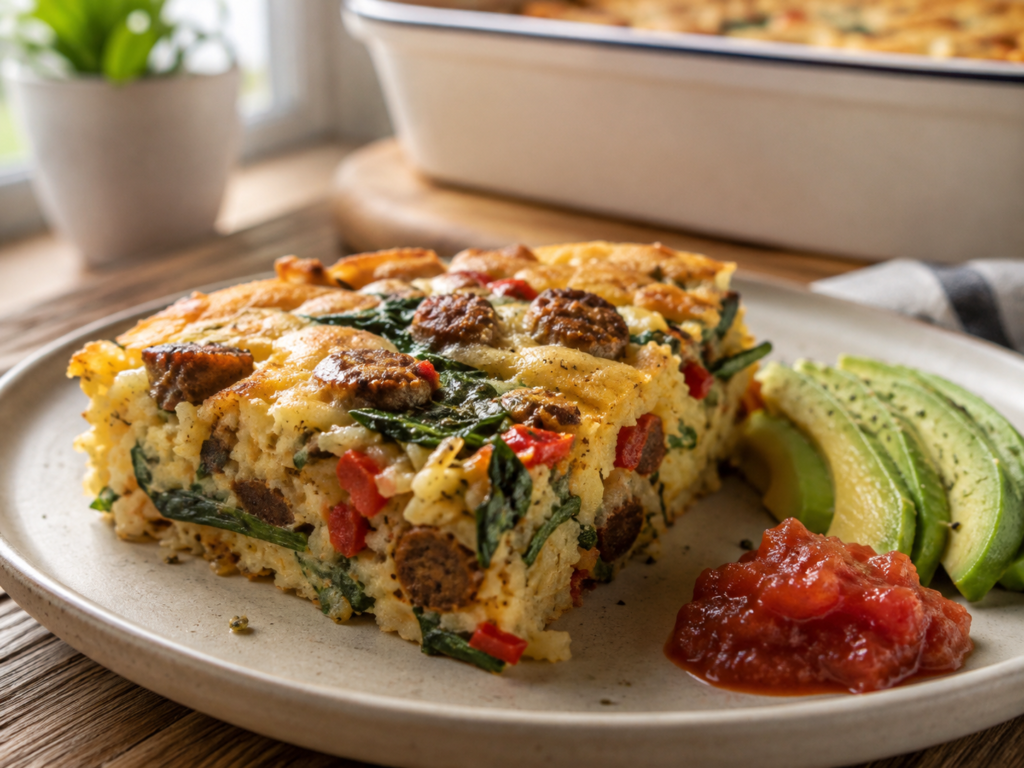
Keep the sides simple.
Fresh fruit gives a nice contrast to the savory potatoes and filling. Avocado or fresh salsa works well with casseroles containing peppers, black beans, or plant-based sausage.
For brunch, add toast, roasted tomatoes, a simple salad, or dairy-free yogurt with fruit.
If you want a larger breakfast spread, serve the casserole alongside vegan breakfast sausage or another dish from Mealloom’s Breakfasts collection.
Frequently Asked Questions
What can replace eggs in a vegan breakfast casserole?
Blended tofu and chickpea flour are two practical choices. Tofu gives the filling a softer texture, while chickpea flour can create more structure as it bakes. You can also combine them or use a commercial vegan egg substitute according to the package directions.
Can I use frozen hash browns in vegan breakfast casserole?
Yes. Frozen hash browns are convenient and can reduce preparation time considerably. Check the package ingredients to confirm they’re vegan, and pay attention to moisture so the potato layer doesn’t make the finished casserole watery.
Can vegan breakfast casserole be made ahead?
Yes. You can prepare the vegetables, potatoes, and filling ahead, or assemble the casserole before you plan to bake it when appropriate. This makes it particularly useful for brunch, holidays, or meal prep.
What vegetables work best in a breakfast casserole?
Bell peppers, onions, spinach, mushrooms, broccoli, and roasted vegetables are all practical options. Vegetables with a lot of moisture usually benefit from being sautéed or partially cooked first so they don’t release too much liquid into the casserole.
Can I make vegan breakfast casserole without tofu?
Yes. Chickpea flour mixed with unsweetened plant milk and seasonings can create an egg-free filling without tofu. You can also use an appropriate commercial vegan egg substitute. The final texture will vary depending on the replacement you choose.
A Flexible Vegan Breakfast for Busy Mornings
A vegan breakfast casserole doesn’t need to imitate an egg-and-cheese casserole ingredient for ingredient. Potatoes, well-seasoned vegetables, a savory plant-based filling, and a few thoughtful toppings can create a satisfying breakfast in their own right.
Use shredded hash browns when you want convenience, roasted potatoes when you want more texture, tofu for a softer filling, or chickpea flour when you prefer a firmer set.
Once you have the basic structure down, it’s easy to adapt the casserole around whatever vegetables and plant-based ingredients you have on hand.
For more morning inspiration, explore easy vegan breakfast ideas, vegan meal prep ideas, and other practical recipes from Mealloom.