
Gluten Free Sourdough Bread: Easy Homemade Vegan Recipe
Gluten Free Sourdough Bread: Easy Homemade Vegan Recipe
Yes, you can make gluten free sourdough bread at home without wheat, dairy, eggs, honey, or commercial yeast. The important part is starting with gluten-free ingredients and an active gluten-free sourdough starter.
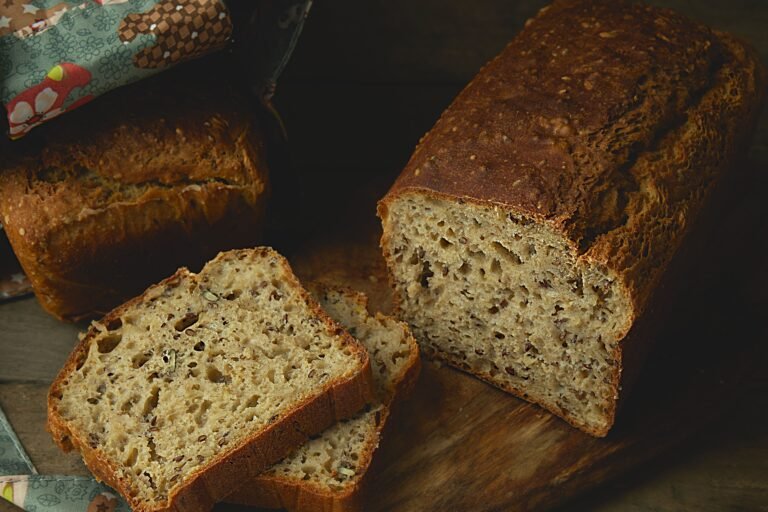
This vegan recipe uses brown rice flour, sorghum flour, tapioca starch, and psyllium husk to create a loaf that is soft enough inside to slice and toast while still developing a nicely browned crust.
The biggest thing to understand is that gluten-free sourdough does not behave like wheat sourdough. The dough is softer, less stretchy, and more delicate because there is no gluten network to develop.
Once you know what the starter, dough, fermentation, and proofing stages should look like, the process becomes much easier. Here’s what matters most.
What Is Gluten Free Sourdough Bread?
Gluten free sourdough bread is bread made with gluten-free flours and an active gluten-free sourdough starter that provides the primary fermentation and rise.
Sourdough describes the fermentation method. It does not automatically mean a bread is gluten-free.
Traditional sourdough is usually made with wheat or rye flour, both of which contain gluten. Genuine gf sourdough bread starts with naturally gluten-free ingredients and a starter maintained with gluten-free flour.
If you need to avoid gluten strictly, check packaged flour and starch labels and keep your starter, utensils, bowls, and work surfaces protected from cross-contamination.
Can You Make Gluten Free Sourdough?
Yes, you can make gluten free sourdough using a starter fed entirely with gluten-free flour.
The naturally occurring yeasts and bacteria in the starter ferment the dough, producing gas, acidity, and flavor.
However, fermentation does not magically remove gluten from wheat flour.
Is Regular Sourdough Gluten Free?
No. Ordinary sourdough made with wheat or rye should not be considered gluten-free simply because it has undergone a long fermentation.
For genuinely gluten-free bread, both the flour blend and the sourdough starter should be gluten-free from the beginning.
How Is Gluten Free Sourdough Different From Wheat Sourdough?
Wheat dough develops a stretchy gluten network that traps fermentation gases.
Gluten-free dough cannot develop that network.
Instead, its structure comes from the balance of gluten-free flour, starch, water, and a binder such as psyllium husk.
That means gluten-free dough is usually:
- softer and stickier;
- less elastic;
- more fragile;
- highly dependent on proper hydration;
- shaped differently from wheat dough.
You also do not need aggressive kneading, repeated stretch-and-folds, or coil folds for this recipe.
If your dough looks softer than wheat sourdough, that’s normal.
What Is a Gluten Free Sourdough Starter?
A sourdough starter is a fermented mixture of flour and water containing naturally occurring yeasts and bacteria.
For gluten-free bread, maintain the starter with gluten-free flour such as:
- brown rice flour;
- sorghum flour;
- millet flour;
- buckwheat flour.
Different flours can affect how quickly the starter rises, how thick it looks, and how it smells.
How Do You Know When the Starter Is Ready?
An active gluten-free starter should show clear fermentation after feeding.
Look for:
- bubbles throughout the starter;
- noticeable expansion;
- an airy interior;
- a fresh fermented aroma;
- predictable activity after feeding.
Do not rely only on the float test. Gluten-free starters can behave differently in water, making that test less dependable.
If you need a complete starter-building tutorial, this article can link to a separate future guide: How to Make a Gluten Free Sourdough Starter.
Ingredients for Gluten Free Sourdough Bread
Brown Rice and Sorghum Flour
A flour blend generally works better than trying to build the entire loaf around one gluten-free flour.
Brown rice flour gives the dough body, while sorghum adds mild whole-grain flavor.
Tapioca Starch
Tapioca starch helps lighten the flour blend and contributes flexibility to the finished crumb.
Active Gluten-Free Starter
Your starter is the primary fermentation and leavening source, so it needs to be visibly active before mixing.
Whole Psyllium Husk
Psyllium is especially useful in gluten-free sourdough because it absorbs water and forms a gel.
That gel helps:
- bind the dough;
- retain moisture;
- trap fermentation gases;
- make shaping easier;
- create a more flexible, sliceable crumb.
This recipe uses whole psyllium husk, not psyllium powder.
Water
Gluten-free flour and psyllium absorb a lot of water.
Do not immediately add extra flour simply because the dough feels sticky. Too little hydration can leave your bread dry and dense.
Easy Gluten Free Sourdough Bread Recipe
This gluten free sourdough bread recipe makes one medium vegan loaf.
Ingredients
- 180 g brown rice flour
- 120 g sorghum flour
- 100 g tapioca starch
- 20 g whole psyllium husk
- 420 g room-temperature water, divided
- 150 g active gluten-free sourdough starter, around 100% hydration
- 10 g fine salt
- 15 g olive oil
Use a kitchen scale whenever possible.
1. Make the Psyllium Gel
Combine the psyllium husk with 350 g of the water.
Stir thoroughly and leave it for about 5 to 10 minutes. It should turn into a thick, soft gel.
2. Mix the Dry Ingredients
In a large bowl, combine the brown rice flour, sorghum flour, tapioca starch, and salt.
3. Mix the Dough
Add the active starter, psyllium gel, olive oil, and remaining 70 g water.
Mix thoroughly until there are no dry patches.
Let the dough rest for about 10 to 15 minutes so the flour and psyllium can finish absorbing moisture.
4. Check the Dough
The dough should be:
- soft;
- moist;
- sticky;
- thick;
- moldable with wet hands.
It should hold a rough shape but should not feel elastic like wheat dough.
It should not be dry and crumbly or runny like pancake batter.
5. Shape
Wet your hands lightly and form the dough into a compact round or oval loaf.
Do not try to create extreme surface tension.
Transfer it to a lightly dusted banneton or towel-lined bowl. A banneton is helpful but not required.
6. Proof
Cover the dough and let it ferment in a comfortably warm place.
For this formula, roughly 3 to 6 hours may be a useful starting range, but fermentation can be faster or slower depending on your starter and room temperature.
Look for a noticeable increase in volume, a slightly puffed surface, and gentle signs of trapped gas.
The dough does not need to double.
Watch the dough, not just the clock.
7. Preheat and Score
Preheat the oven and Dutch oven to 450°F / 230°C.
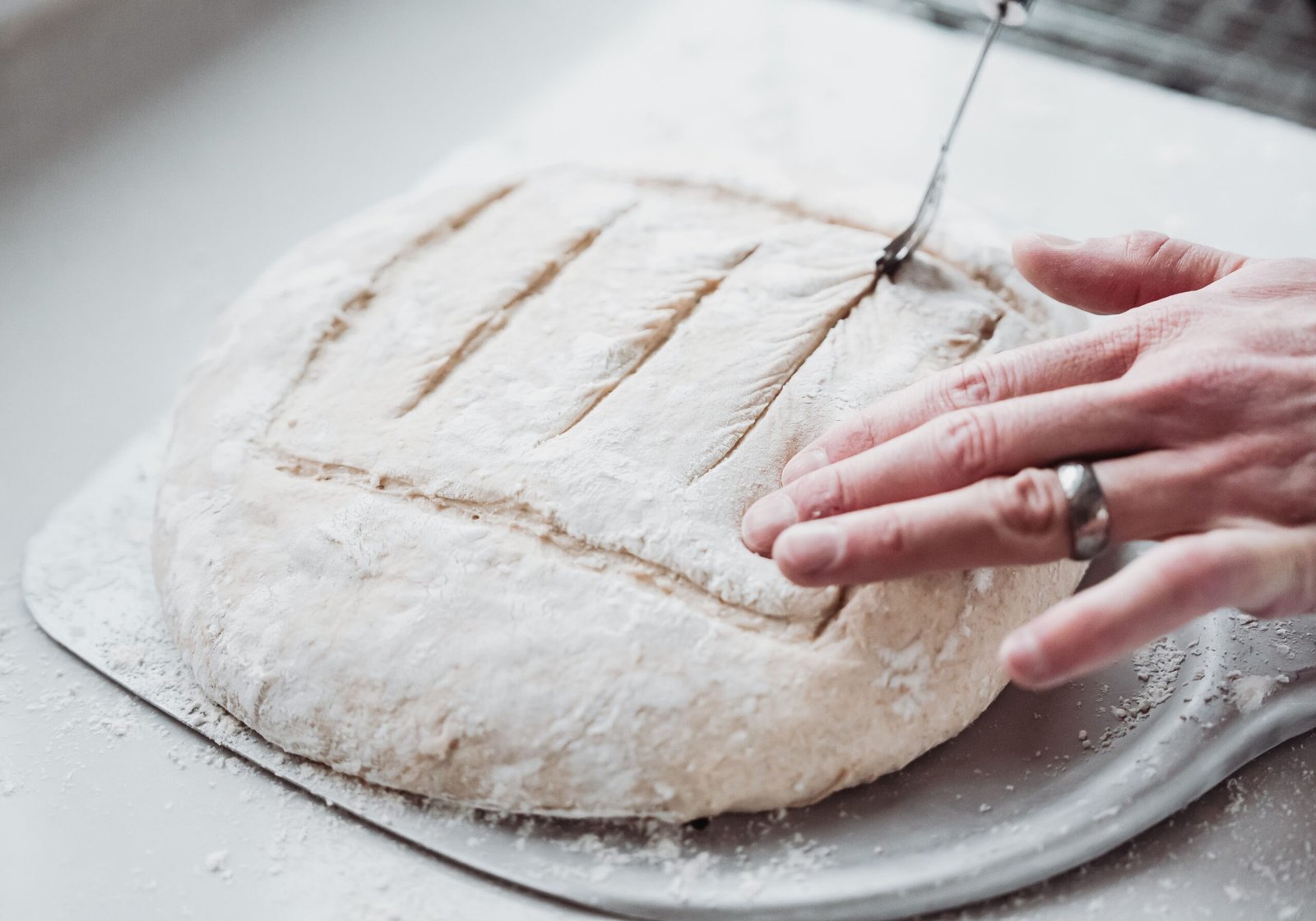
Carefully transfer the proofed loaf onto parchment paper and make one clean score across the surface.
8. Bake
Place the loaf in the hot Dutch oven.
Bake covered for 20 minutes at 450°F / 230°C.
Remove the lid, reduce the temperature to 410°F / 210°C, and bake for another 40 to 45 minutes.
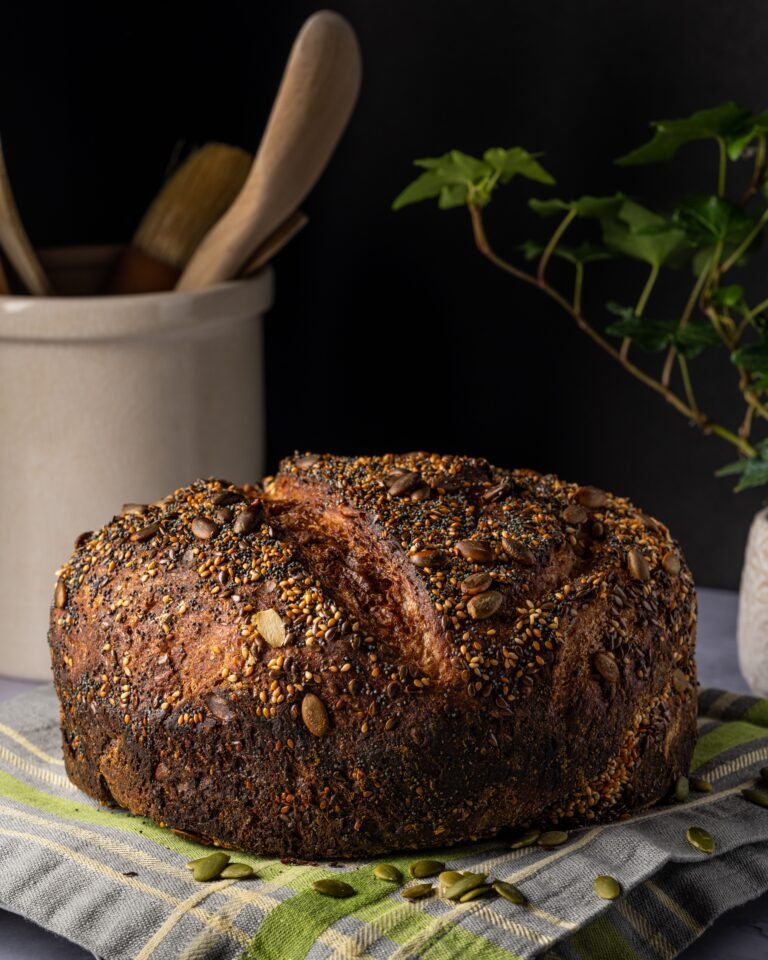
The loaf should have a deeply browned crust and feel firm.
An internal temperature around 205 to 210°F / 96 to 99°C can be one useful doneness indicator, but do not rely on temperature alone.
9. Cool Completely
Transfer the loaf to a cooling rack and let it cool completely before slicing.
This may take several hours.
Does Gluten Free Sourdough Need Kneading?
No. Traditional kneading develops gluten, and this dough does not contain gluten.
What matters instead is thorough mixing.
You need the water, flour, starter, salt, and psyllium to be evenly distributed throughout the dough.
For this recipe, repeated stretch-and-folds and coil folds are unnecessary.
How Does Gluten Free Sourdough Fermentation Work?
The active starter ferments the flour and produces gas.
Because gluten-free dough lacks an elastic gluten network, psyllium helps the dough retain some of that gas as it expands.
Fermentation speed depends on:
- starter activity;
- flour type;
- hydration;
- room temperature;
- dough temperature;
- quantity of starter.
This is why exact fermentation times should always be treated as estimates.
How to Tell When the Dough Is Properly Proofed
Properly proofed gluten-free sourdough usually becomes fuller and lighter.
Look for:
- visible expansion;
- slight puffiness;
- a softer, fuller surface;
- small signs of trapped gas.
Do not automatically wait for the loaf to double.
Under-Proofed Dough
Possible signs include very little expansion, few signs of fermentation, and a heavy feel.
The finished loaf may have a dense, tight crumb.
Over-Proofed Dough
The dough may spread, weaken, deflate, or lose its shape.
An over-proofed loaf can also collapse during baking.
Aim for controlled expansion rather than maximum expansion.
Why Gluten Free Sourdough Can Turn Out Dense or Gummy
Bread Is Too Dense
Common causes include:
- weak starter;
- insufficient fermentation;
- too little water;
- adding too much flour;
- poor gas retention.
Make sure the starter is active and resist making the dough stiff simply because sticky dough feels unfamiliar.
Bread Is Gummy Inside
Possible causes include:
- underbaking;
- slicing while still warm;
- too much water;
- inaccurate measurements;
- too much binder;
- fermentation problems.
Before changing the recipe, make sure the loaf has been baked thoroughly and cooled completely.
Bread Rose and Collapsed
This can happen because of:
- over-proofing;
- excessive hydration;
- insufficient structure;
- underbaking.
If the dough becomes very expanded and fragile before baking, shorten the proof next time.
Dough Is Too Dry
Your flour may be more absorbent, or your measurements may be off.
Do not expect dry, kneadable dough. Gluten-free sourdough should remain well hydrated.
Dough Seems Too Wet
Give it the full hydration rest before adjusting anything.
Psyllium continues absorbing water after mixing.
Only consider an adjustment if the dough remains unable to hold any shape after resting.
Best Flours for Gluten Free Sourdough
Brown rice, sorghum, millet, and buckwheat can all work well in gluten-free sourdough recipes.
Starches such as tapioca and potato starch are also commonly combined with grain flours to improve texture.
These ingredients are not automatically interchangeable 1:1.
Changing the flour blend can change:
- water absorption;
- dough handling;
- flavor;
- fermentation;
- crumb structure.
Be particularly careful with almond flour, coconut flour, and chickpea flour. They behave very differently from grain-based gluten-free flours and should not simply replace brown rice or sorghum gram-for-gram.
If you use oat flour and must strictly avoid gluten, choose appropriately labeled gluten-free oats or oat flour.
Can You Make Gluten Free Sourdough Without Psyllium?
Yes, but it is better to use a recipe specifically formulated without psyllium.
Other binders can include xanthan gum, chia, or flaxseed, but they are not direct 1:1 substitutes.
Changing the binder usually changes hydration, handling, proofing, and final texture.
Do You Need a Dutch Oven?
No.
A Dutch oven is useful because it traps steam around the loaf during the first part of baking, but it is not essential.
You can also use a preheated baking stone, steel, or heavy baking sheet with a safe steam method, or cover the loaf with another oven-safe vessel during the beginning of baking.
How to Store Gluten Free Sourdough Bread
Let the loaf cool completely before storing it.
Keep it well wrapped or in an airtight container to reduce moisture loss.
For longer storage, slice the loaf before freezing. Individual slices can then be thawed or toasted directly from frozen.
If you want a faster bread that does not require maintaining a starter, link readers to Mealloom’s Gluten Free Bread: Easy Homemade Vegan Yeast Bread using an anchor such as easy gluten free bread or gluten free yeast bread.
Frequently Asked Questions
Is sourdough naturally gluten free?
No. Sourdough describes fermentation. Wheat and rye sourdough still contain gluten.
Does gluten free sourdough need commercial yeast?
No. A traditional gluten-free sourdough loaf can rely on an active gluten-free starter for fermentation and rise.
Why didn’t my gluten free sourdough rise?
The starter may have been weak, the dough may have needed more fermentation time, the environment may have been too cold, or the dough may have been too dry.
Does gluten free sourdough need psyllium husk?
Not every recipe does, but this recipe uses psyllium to help with structure, moisture retention, shaping, and gas retention.
How long should gluten free sourdough proof?
There is no universal time. Starter strength, flour, hydration, and temperature all matter. Use visual expansion and dough condition as your main guides.
Can gluten free sourdough bread be frozen?
Yes. Cool it completely, slice it, and freeze individual slices for easy thawing or toasting.
Final Tips
Making good gluten free sourdough bread is much easier once you stop expecting the dough to behave like wheat sourdough.
Focus on an active gluten-free starter, accurate measurements, enough hydration, soft but moldable dough, and visible fermentation cues.
Avoid over-proofing, bake the loaf completely, and resist cutting into it while it is still warm.
Get those fundamentals right, and you will have a much better foundation for making reliable homemade vegan gluten-free sourdough.